
 English
Sports injuries in Zeist: back to your sport after an injury
An injury that keeps you off the pitch or the road is frustrating. At MoveWell Fysiotherapie Zeist we first examine which tissue is affected. Then we build up in three stages to the sprint, jump or stroke your sport asks for. A sprained ankle takes three to six weeks, a cruciate ligament nine to twelve months.
Written by Jeroen Vermeer, physiotherapist at MoveWell Fysiotherapie Zeist · Last updated 27 October 2026
In short
- A referral is not needed. If you do have one, please bring it.
- You can be seen within a few days.
- Tests, not the calendar, decide when you return to your sport.
- MoveWell has contracts with all Dutch health insurers and invoices them directly.
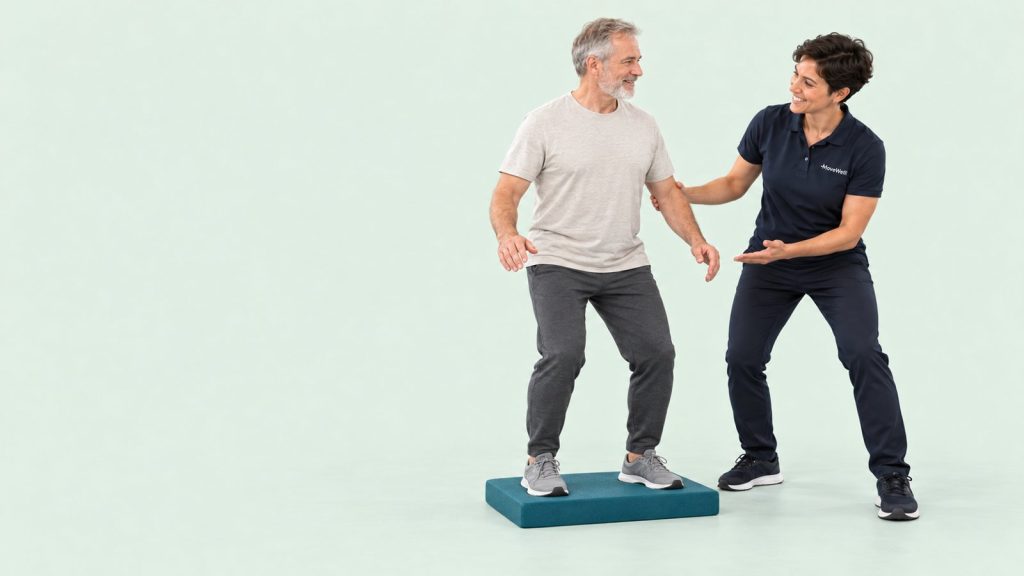
Which sports injuries do we treat in Zeist?
We see two kinds of injury most often: the acute one after a single wrong step, and the overload that creeps in.
- Ankle. A sprained or unstable ankle. If you stop exercising too early, it often gives way again.
- Knee. Cruciate ligament and meniscus injuries, and jumper’s knee: pain at the knee tendon when jumping and landing.
- Achilles tendon and heel. Runners who build up too fast, and pain under the heel at the first steps.
- Shin splints. Pain along the shin bone. We build up the kilometres according to a schedule.
- Hamstring and calf. A hamstring injury, or a calf muscle that tears during a sprint.
- Shoulder and elbow. Overloaded tendons, instability after a dislocated shoulder, tennis elbow and padel complaints.
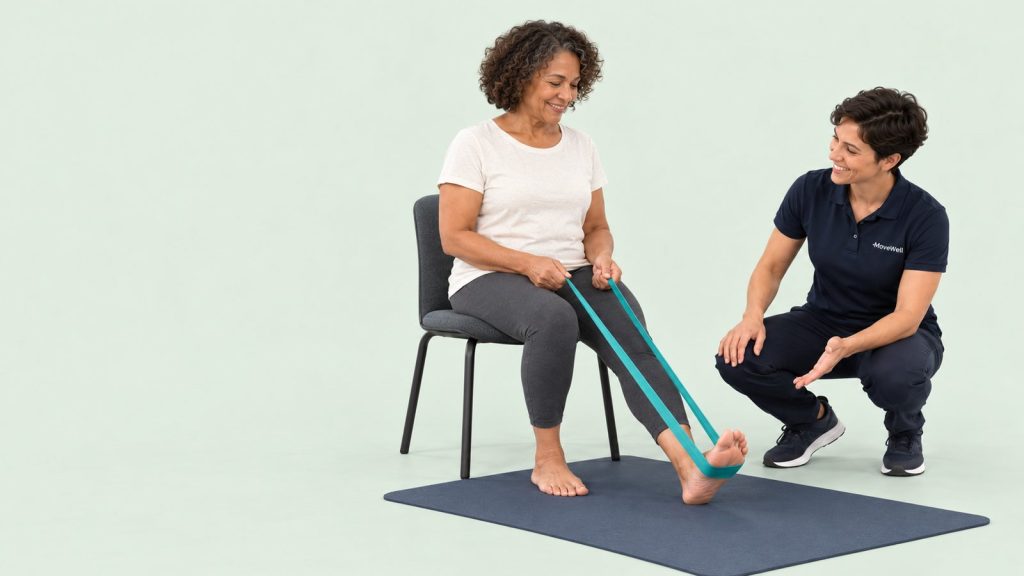
Which treatment fits your sports injury?
That depends on the tissue and the phase. A fresh muscle tear asks for something different from a tendon that has been nagging for months. That is why every sports rehabilitation starts with an examination: movement tests and strength measurements. You hear which tissue is involved and what you can and cannot do.
Exercise therapy is the basis: strength, mobility and coordination, built up in the exercise room. For stubborn tendon complaints we add shockwave therapy. Dry needling helps a muscle that does not let go, such as a calf or hamstring that stays tight after a tear. Manual techniques can support the treatment.
With an overload injury the cause is almost always doing too much too soon. The sooner you come, the smaller the chance that a small injury becomes a long one.
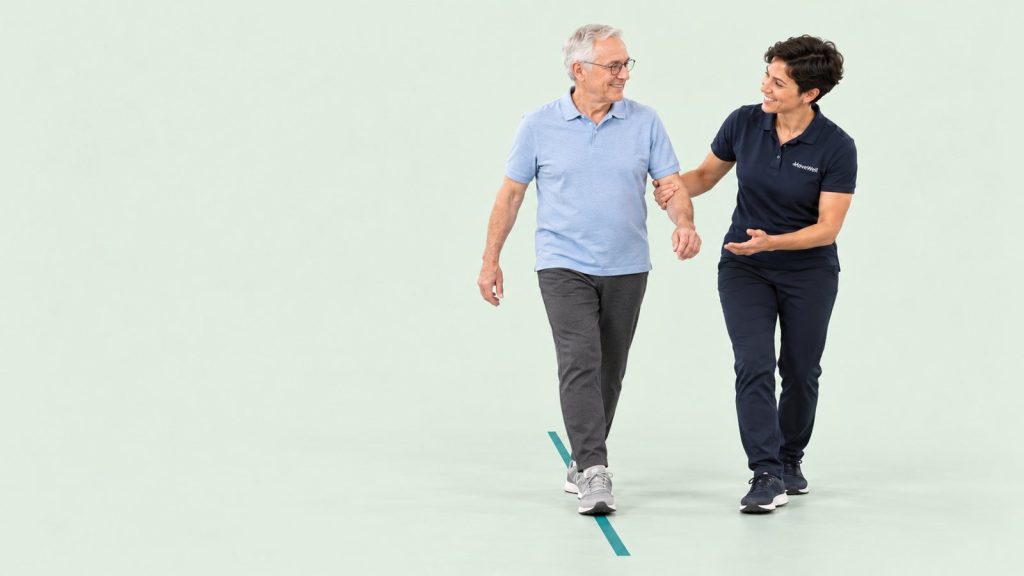
How does sports rehabilitation work in three stages?
We ask how the injury happened, what your sport demands and at what level you play. A recreational runner on the Heuvelrug gets a different plan from a hockey player in the first team.
- Stage 1, moving. Load the tissue calmly, get swelling and pain under control and restore mobility. Runners often swap running for cycling for a while.
- Stage 2, stabilising. Strength and control around the injured joint, with measurable goals such as strength left against right or a jump test.
- Stage 3, functioning. Sprinting, jumping, turning and hitting. First training without contact, then full training, then matches.
Not sure whether your injury needs physiotherapy? Call us, and we think along with you.
How long does recovery from a sports injury take?
We are honest about the timeline. A sprained ankle takes three to six weeks, a torn calf muscle four to eight weeks, a hamstring six to twelve weeks and a cruciate ligament nine to twelve months.
We do not stop when the pain is gone, but keep building until you can do what your sport asks. That lowers the chance that the same injury starts again three months later.
Why sports rehabilitation at MoveWell in Zeist?
- Tissue first. Tendon, muscle, ligament or bursa: the plan fits what is affected.
- Decisions based on numbers. Tests decide when you move on, not the calendar.
- Exercise room under the same roof. Equipment for strength and fitness, and space for jumping, sprinting and balance work.
- A schedule for home and the club, so the build-up continues between visits.
What does sports rehabilitation cost?
Sports rehabilitation is physiotherapy and is reimbursed from supplementary insurance (aanvullende verzekering). After a cruciate ligament reconstruction, basic insurance pays from the 21st session, with a referral (chronic list). Without cover, a first consultation costs 62 euros and a follow-up 47 euros. All details are on our page about costs and insurance.
Which treatments support your rehabilitation?
Exercise therapy is the basis. Next to it, we have these options at the Panweg.
Questions about sports injuries in Zeist
How long does sports rehabilitation take?
That depends on the injury: from three to six weeks for a sprained ankle to nine to twelve months for a cruciate ligament operation. After the examination you receive an estimate.
Do I need a referral for sports rehabilitation?
A referral is not needed. If you do have one, please bring it. You can book an appointment yourself, online or by calling 030 695 5269.
Is sports rehabilitation covered by insurance?
It falls under physiotherapy and is reimbursed from supplementary insurance, for the number of sessions in your policy. After a cruciate ligament reconstruction, basic insurance pays from the 21st session, with a referral.
When can I play sport again after an injury?
When the tests say so: equal strength left and right, a jump test that is in order and a build-up without setbacks. First training without contact, then full training, then matches.
Do I have to stop my sport during rehabilitation?
Rarely completely. Runners cycle for a while, strength athletes adjust their schedule, hockey players first train without contact. You adapt the load and keep the habit.
Why a scan for a sports injury?
To see whether a tendon, muscle, ligament or bursa is involved. That decides the treatment and the duration. If needed, your physiotherapist can make an ultrasound scan during the consultation.
How do I prevent the injury from coming back?
Keep building until you can do the movements your sport asks for, and keep training strength after that. Strength training twice a week is enough for most athletes.
Can I rehabilitate at MoveWell after sports surgery?
Yes. After a cruciate ligament, meniscus, ankle ligament or shoulder operation we first follow the phases of your surgeon. Then we take the last step back to your sport.
Sources for this article
This article is based on the guidelines and studies below, and on the experience of our clinicians.
- Simple decision rules can reduce reinjury risk by 84% after ACL reconstruction: the Delaware-Oslo ACL cohort study, British Journal of Sports Medicine (2016). View the article
- The Preventive Effect of the Nordic Hamstring Exercise on Hamstring Injuries in Amateur Soccer Players, The American Journal of Sports Medicine (2015). View the article
- KNGF-richtlijn Enkelletsel, Koninklijk Nederlands Genootschap voor Fysiotherapie (2023). View the guideline
- Richtlijn Voorste kruisbandletsel, Richtlijnendatabase, Federatie Medisch Specialisten (2018). View the guideline

About the author
Jeroen Vermeer, physiotherapist at MoveWell Fysiotherapie Zeist. Physiotherapist (BIG 39920354404) at MoveWell in Zeist. Mainly guides people with knee and hip complaints, osteoarthritis and recovery after surgery, with exercise therapy in the exercise room at the Panweg.
Last updated 27 October 2026.
Would you like to get back to your sport?
Book online or call 030 695 5269. You can be seen within a few days. Concerned? Please contact our practice. Panweg 55, 3705 GB Zeist.