
 English
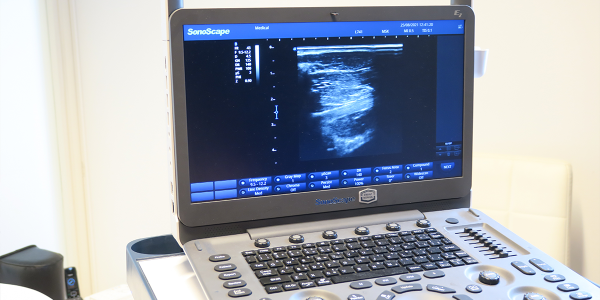
With a diagnostic ultrasound scanner your physiotherapist looks at tendons, muscles, ligaments and joints during the consultation. A torn calf muscle, a thickened Achilles tendon, fluid in a knee, a rotator cuff tear: you see it on the screen and we explain it. It takes a few minutes, does not hurt, and often saves a trip to the hospital. Ultrasound is also used to follow healing and to guide shockwave therapy to the right spot.
Dry needling, shockwave therapy and ultrasound in Zeist
Hands and exercises do most of the work in physiotherapy. For some complaints we add a technique: dry needling for muscle knots, shockwave therapy for stubborn tendons, and diagnostic ultrasound to see what we are treating. All three are available at the Panweg in Zeist, and this page explains when they help and when they do not.
Diagnostic ultrasound: see what is going on
Dry needling: for muscles that will not let go
Dry needling uses a thin acupuncture needle to release a trigger point, a tight band in a muscle that causes local or referred pain. The needle goes directly into the knot; the muscle twitches and relaxes. It is used for neck and shoulder pain, tension headaches, lower back and hip pain, calf and hamstring tightness, and tennis elbow. It is not acupuncture: no energy lines, just anatomy. Some soreness for a day afterwards is normal.
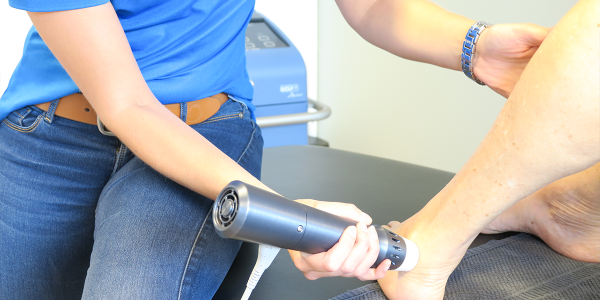
Shockwave therapy: radial and focal
MoveWell has both types of shockwave equipment at the Panweg: radial for larger areas such as the calf and plantar fascia, focal for precise, deeper targets such as the Achilles or patellar tendon.
Costs
Dry needling and radial shockwave are part of a normal treatment (47 euros). Diagnostic ultrasound costs 32 euros and focal shockwave 14 euros per session on top, both often partly reimbursed from supplementary insurance.
Nederlandse versie: fysiotherapiezeist.nl/behandeling-fysiotherapie/dry-needling/
The complaints for which we use these techniques most, and what you can expect.
When we use these techniques
Plantar fasciitis and heel spur
Heel pain in the morning. Shockwave therapy has good evidence here, combined with calf loading and footwear advice.
Achilles tendon
Thickened, painful tendon in runners and walkers. Loading exercises first, focal shockwave when progress stalls.
Tennis elbow
Pain on the outside of the elbow. Dry needling of the forearm, shockwave and a loading programme.
Calcified shoulder
Calcium deposits in the rotator cuff tendon. Focal shockwave can break them down; ultrasound shows the result.
Neck and shoulder knots
Trigger points in the trapezius and shoulder blade muscles. Dry needling releases them in minutes.
Hip and buttock pain
Gluteal tendon pain and piriformis tightness. Ultrasound to see, dry needling and shockwave to treat, strength to keep.
Patellar tendon
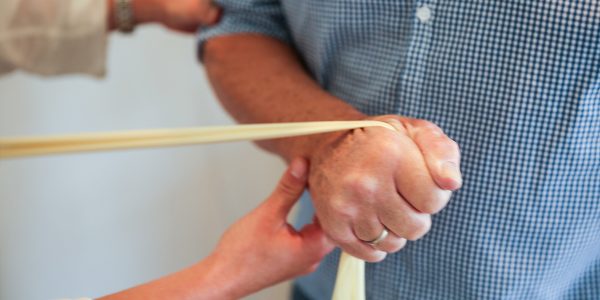
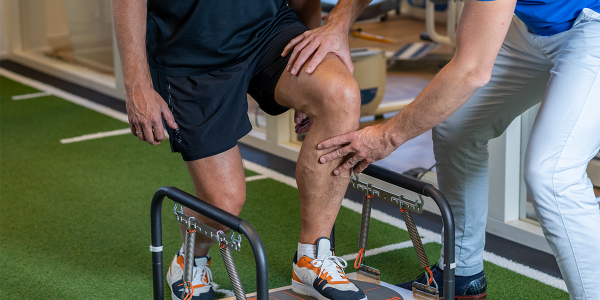
Jumper’s knee in volleyball, basketball and hockey. Ultrasound, loading programme and focal shockwave.
Muscle tears
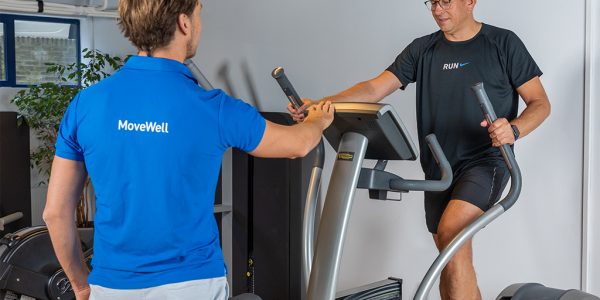
Calf, hamstring or thigh. Ultrasound shows the grade and location, which sets the timeline for return to sport.
Checking healing
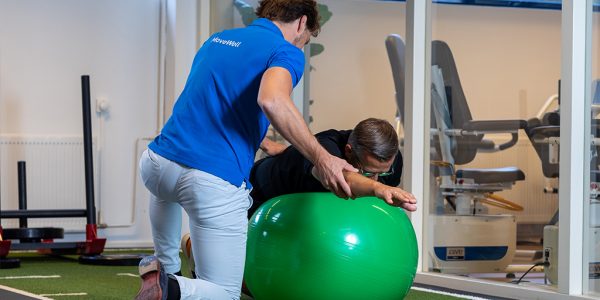
Ultrasound lets us follow a tendon or muscle over weeks, so the decision to load more is based on what we see.
Three steps to recovery
MoveWell Fysiotherapie Hilversum is er voor alle leeftijden en vrijwel elke klacht kan behandeld worden door een fysiotherapeut. Wij leggen u dit uit in 3 stappen om de aanpak van de fysiotherapeut beter te begrijpen.
Step 1: Move
First we restore movement. Pain makes you guard the area, and a joint or muscle that is not used stiffens further. Hands-on treatment, mobilisation and the first gentle exercises get you moving again, usually within the first two or three sessions.
Step 2: Strengthen
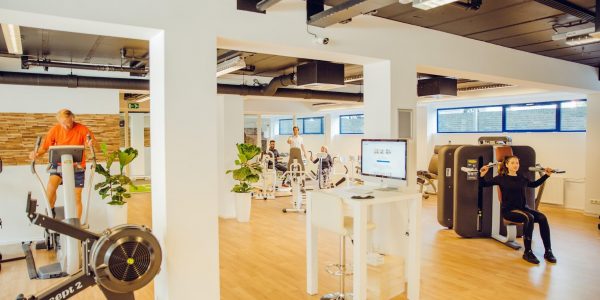
Then we build strength and stability. In our exercise room at the Panweg you train the muscles that protect the joint, with a programme set by your physiotherapist and adjusted every visit. This is the part that makes the result last.
Step 3: Function
Finally we make it work in daily life: lifting, sitting at a desk, running, playing with your children. You leave with a short home programme and advice on posture and load, so you know what to do if the complaint ever returns.
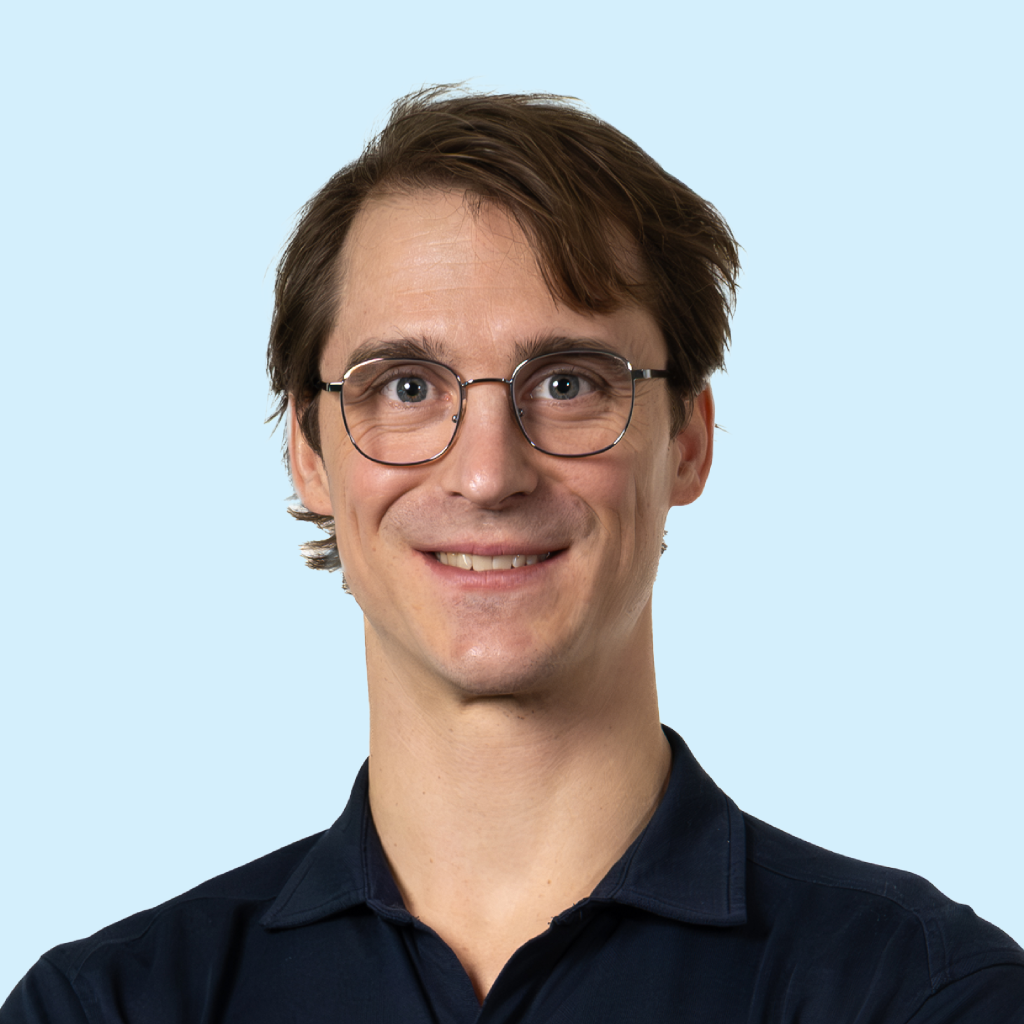
Who treats you at MoveWell Zeist?


Frequently asked questions
Does dry needling hurt?
You feel the needle briefly and often a twitch in the muscle, which can be uncomfortable for a second. Afterwards the muscle can feel sore for a day, like after training. Most people find the relief worth it.
How many shockwave sessions do I need?
Usually three to five sessions, one week apart, combined with exercises. Tendons respond slowly; the effect builds over six to twelve weeks.
Is ultrasound the same as an MRI?
No. Ultrasound is excellent for tendons, muscles and superficial structures and gives an answer during your visit. An MRI looks deeper, at discs and cartilage, and is arranged through your GP when needed.
Can I have shockwave if I take blood thinners or am pregnant?
Blood thinners and pregnancy are reasons not to use shockwave. Tell your physiotherapist about medication and pregnancy at the first visit; there is always an alternative.
Are these techniques reimbursed?
Dry needling and radial shockwave are part of normal physiotherapy and reimbursed from supplementary insurance. Ultrasound (32 euros) and focal shockwave (14 euros) are charged separately and often partly reimbursed.
Is dry needling the same as acupuncture?
No. Acupuncture works with points and meridians; dry needling targets a trigger point in a muscle, based on anatomy. Only the needle is the same.
Can I exercise after shockwave therapy?
Light activity, yes. Avoid heavy loading of the treated tendon for a day or two. Your physiotherapist gives you a schedule that fits your sport.
Techniques that support the treatment, not replace it
Shockwave and dry needling work best in a programme with exercises and advice. Your physiotherapist explains what fits your complaint. Call 030 695 5269 or book online at the Panweg 55 in Zeist.