
 English
Rehabilitation after surgery in Zeist: from the first week to full strength
The first weeks after an operation are hard. The joint is swollen, the wound pulls and you do not know what is allowed. At MoveWell Fysiotherapie Zeist we work within your surgeon’s protocol and decide how much you can load today. From there we build up to what you want to be able to do again. Ideally you start within a week of discharge.
Written by Jeroen Vermeer, physiotherapist at MoveWell Fysiotherapie Zeist · Last updated 27 October 2026
In short
- A referral is not needed. If you do have one, please bring it.
- Bring your discharge letter and the schedule from the hospital.
- You can be seen within a few days.
- You train in our own exercise room at the Panweg, with one physiotherapist.
- MoveWell has contracts with all Dutch health insurers and invoices them directly.
What happens in the first weeks after surgery?
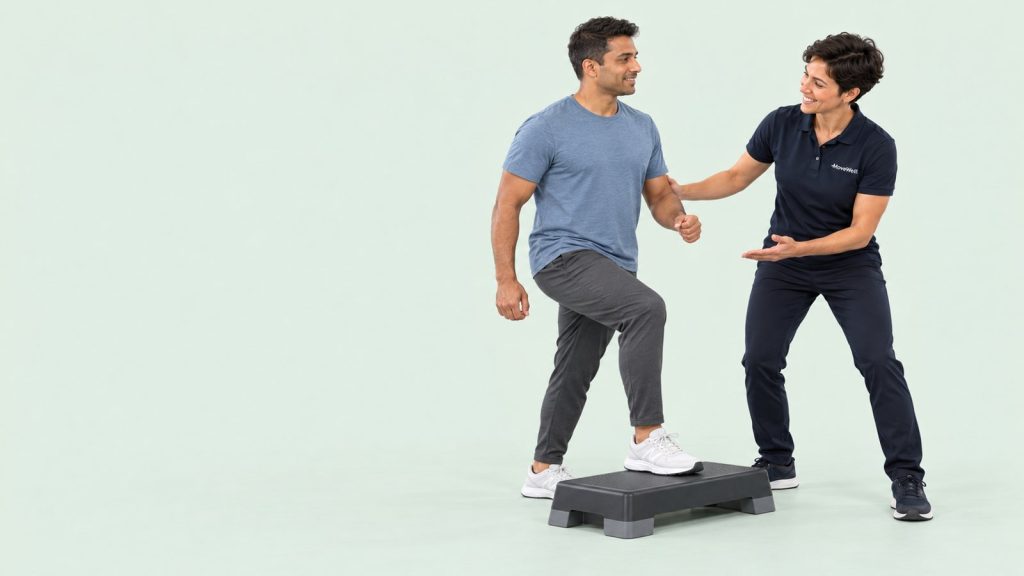
Your discharge letter and the hospital schedule state what your surgeon allows: how much weight you may put on the joint, how far you may bend and how long a sling or cast stays on. Within those limits your physiotherapist looks for the load that fits your joint today.
In the first week three things matter. Bringing the swelling down. Moving the joint within what is allowed, because stiffness is harder to get rid of later. And waking up the muscles the operation has switched off. You take home three or four exercises.
How does your physiotherapist build up the load?
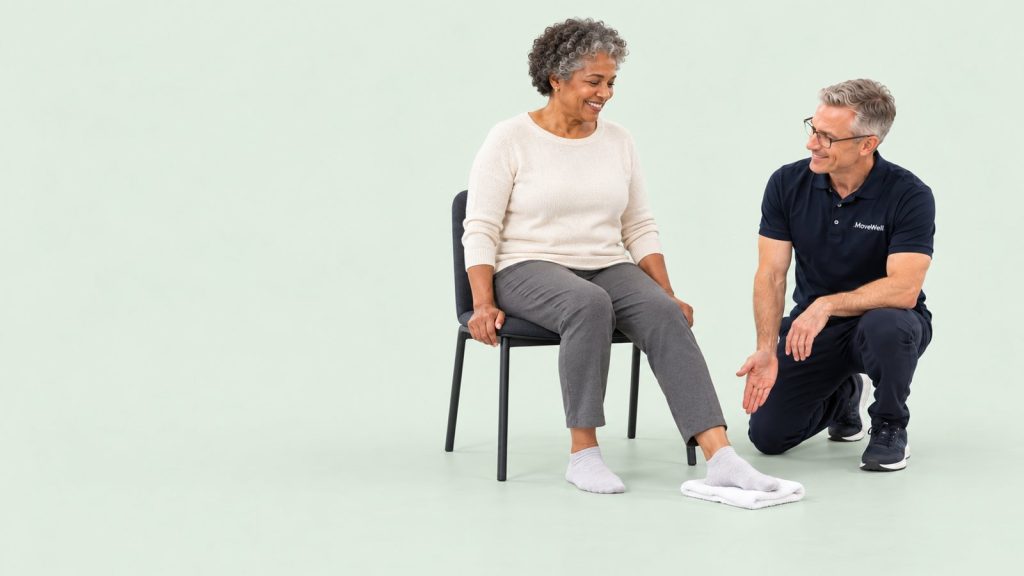
Three phases, with a measurement at each transition. The weeks differ per joint and per operation. The order does not.
- Week 1: swelling, wound and the first exercises. Elevating, moving calmly within the limits of your surgeon and tensing the switched-off muscles again, several times a day.
- Week 2 to 6: moving and getting the muscles back to work. A larger range of motion and the first loaded exercises. Pain during exercise is allowed. Pain that is still severe the next morning is too much.
- From week 6: strength in the exercise room. Cycling, leg press, step exercises and balance, a little heavier every week. Every six weeks we measure mobility and strength, so you see for yourself what changes.
Your physiotherapist also treats the swelling and the scar. Manual techniques can support the treatment.
After which operations do we rehabilitate?
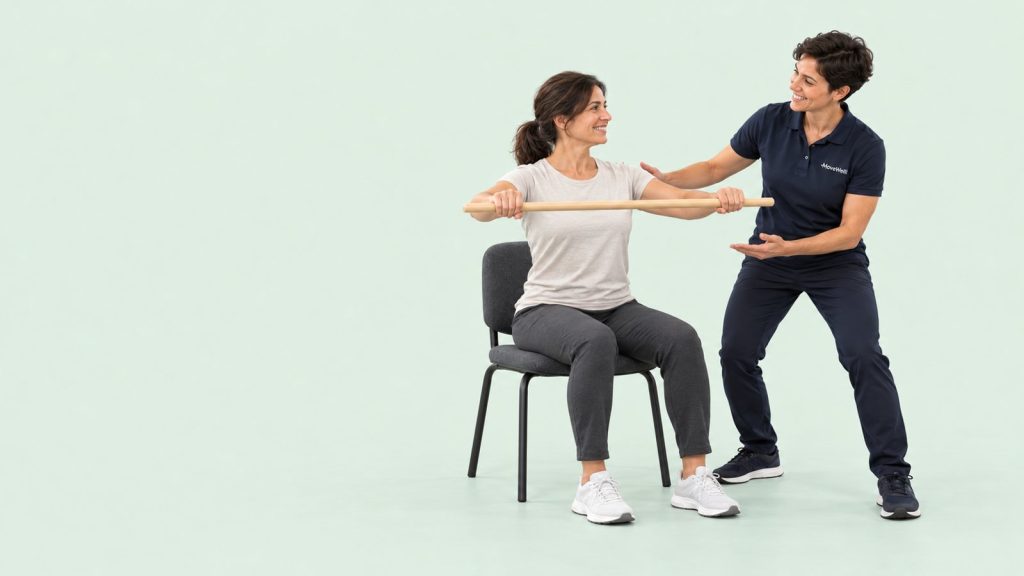
The build-up is similar in outline. The difference lies in what the surgeon did exactly.
- Knee. From six weeks after an arthroscopy to nine months or longer after a cruciate ligament reconstruction. First the knee has to straighten fully.
- Hip. After a replacement the middle buttock muscle, the gluteus medius, gets most of the work. A hip replacement takes about three months.
- Shoulder. Six to twelve weeks after a minor procedure, six to nine months after a tendon repair or a replacement. The tendon decides what is allowed.
- Ankle or foot. Count on three months until you walk normally and four to six months for sport.
- Back. After a hernia operation or a spinal fusion, learning to carry load again.
- Fracture with a plate, screws or a pin. Moving earlier, with care for the scar.
Is your operation not on the list? Guided build-up is useful then too, for example after abdominal surgery or neck surgery: first mobility, then strength and fitness. Not sure? Call us, and we think along with you.
Why rehabilitate at MoveWell in Zeist?
- Within your surgeon’s protocol. The surgeon decides what is allowed, we find the right load.
- Measured every six weeks. Mobility and strength in numbers, compared with the other side.
- One physiotherapist, one plan. The same person sets out your plan and adjusts it.
- Exercise room under the same roof, with cycling, leg press, treadmill and free weights.
- Training before the operation. Four to six weeks of preparation makes the muscles stronger, and the physiotherapist who sees you before also guides you afterwards.
- Keep training afterwards. When rehabilitation is finished, you can continue with medical fitness in the same exercise room.
What does rehabilitation after surgery cost?
Rehabilitation is physiotherapy and is reimbursed from supplementary insurance (aanvullende verzekering), for the number of sessions in your policy. After a joint replacement or a cruciate ligament reconstruction, basic insurance pays from the 21st session, with a referral (chronic list). The first 20 come from supplementary insurance or you pay them yourself. MoveWell has contracts with all Dutch health insurers and invoices them directly. All details are on our page about costs and insurance.
Where does your rehabilitation lead?
Rehabilitation ends where your daily life or your sport begins. These pages help with the next step.
Questions about rehabilitation after surgery
How soon after surgery do I start rehabilitation?
Ideally within a week of discharge, and after a joint replacement preferably within a few days. A joint that stands still becomes stiff, and that stiffness is harder to get rid of later.
Do I need a referral?
A referral is not needed. If you do have one, please bring it. Please also bring the discharge letter and the schedule from the hospital.
Is rehabilitation after surgery covered by insurance?
It comes from supplementary insurance, for the number of sessions in your policy. After a joint replacement or a cruciate ligament reconstruction, basic insurance pays from the 21st session, with a referral.
May exercising hurt after surgery?
Pain during exercise is allowed. If the pain is still severe the next morning, or the joint stays more swollen, we take a step back.
How long does rehabilitation after surgery take?
From six weeks after an arthroscopy to nine months or longer after a cruciate ligament reconstruction. A hip replacement takes about three months. After the first examination you receive an estimate.
Can I start before the operation?
Yes. Four to six weeks of training beforehand makes the muscles stronger, and you already know the exercises you need afterwards. Mention preparation when you call.
My operation is not listed. Can I still come?
Yes. Guided build-up is also useful after abdominal surgery, a wrist fracture with a plate or an operation on the neck: first mobility, then strength and fitness.
What do I do when rehabilitation is finished?
You receive a programme to continue on your own. If you want to keep training under guidance, that is possible with medical fitness in the same exercise room.
Sources for this article
This article is based on the guidelines and studies below, and on the experience of our clinicians.
- Joint replacement (primary): hip, knee and shoulder (NG157), National Institute for Health and Care Excellence (NICE) (2020). View the guideline
- Does preoperative rehabilitation for patients planning to undergo joint replacement surgery improve outcomes? A systematic review and meta-analysis, BMJ Open (2016). View the article
- Effectiveness of physiotherapy exercise following total knee replacement: systematic review and meta-analysis, BMC Musculoskeletal Disorders (2015). View the article
- Richtlijn Totale heupprothese, Richtlijnendatabase, Federatie Medisch Specialisten (2019). View the guideline

About the author
Jeroen Vermeer, physiotherapist at MoveWell Fysiotherapie Zeist. Physiotherapist (BIG 39920354404) at MoveWell in Zeist. Mainly guides people with knee and hip complaints, osteoarthritis and recovery after surgery, with exercise therapy in the exercise room at the Panweg.
Last updated 27 October 2026.
Home from hospital, or is your operation planned?
Book online or call 030 695 5269. You can be seen within a few days. Concerned? Please contact our practice. Panweg 55, 3705 GB Zeist.